
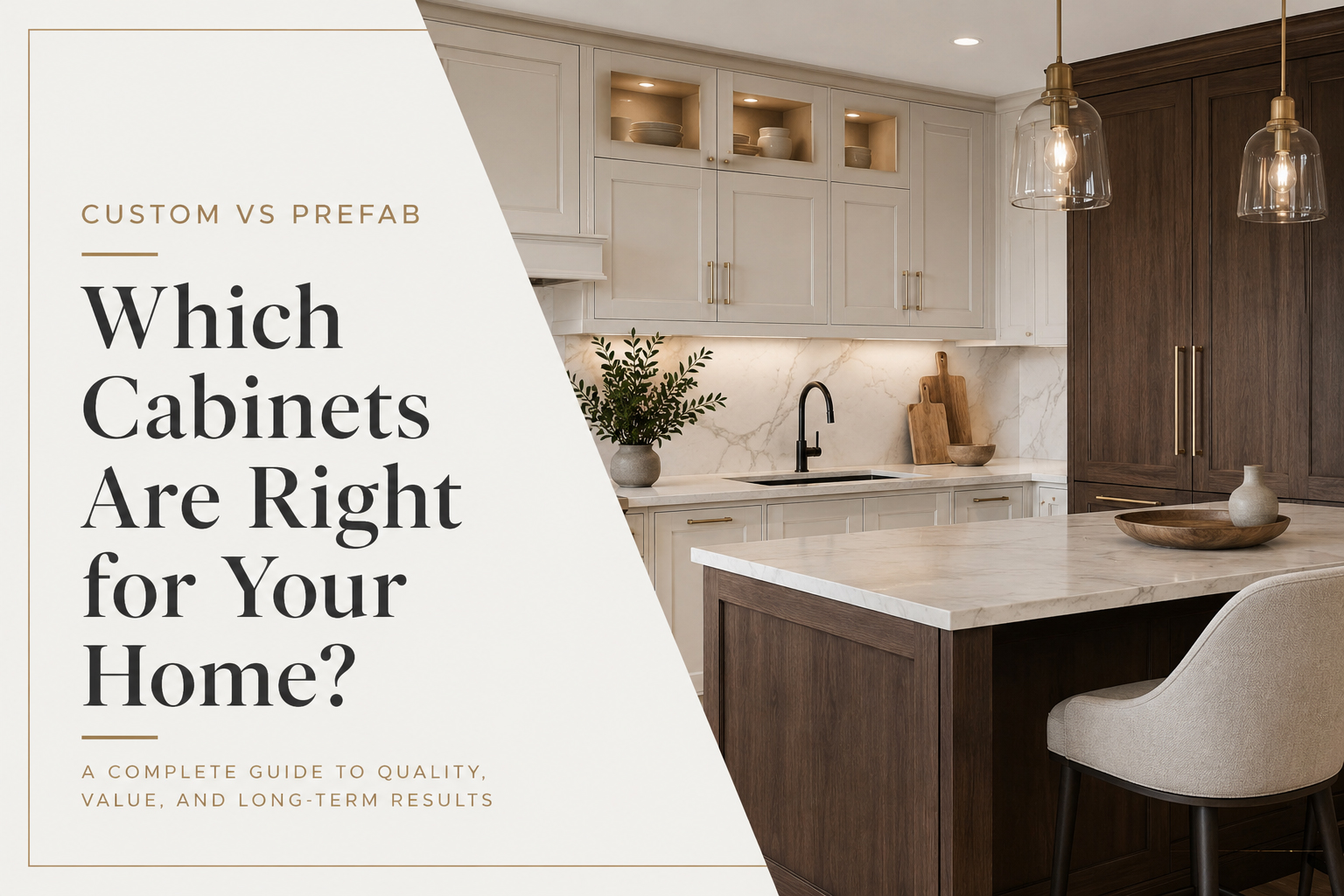
When planning a kitchen or bathroom renovation, one of the biggest decisions you’ll face is choosing between custom and prefabricated cabinets. While prefab options are often seen as the quicker and more affordable route, custom cabinetry is widely regarded as the superior long-term solution.
The real difference isn’t just cost—it’s how well your cabinets fit your space, how they function day-to-day, and how long they’ll last. By understanding what each option offers, you can make a more informed investment in your home.
What Are Prefabricated Cabinets?
Prefabricated cabinets are built in standard sizes and mass-produced for efficiency. Because they’re manufactured in bulk, they’re typically more affordable and available on shorter timelines.
They’re designed to fit common layouts, making them a convenient option for straightforward spaces where standard dimensions work without major adjustments.
However, because they are not made specifically for your home, some compromises in fit, storage, and finish are often unavoidable.
What Are Custom Cabinets?
Custom cabinets are built to exact specifications, allowing complete control over dimensions, materials, finishes, and functionality.
Instead of working around pre-set sizes, custom cabinetry is designed to fit your space perfectly. This results in a more seamless appearance, better use of space, and a layout that supports how you actually live.
Custom solutions are especially valuable in kitchens, bathrooms, and other high-use areas where both form and function matter.
Precision Fit and Space Efficiency
One of the biggest advantages of custom cabinetry is its ability to fit your space exactly.
Prefab cabinets come in fixed dimensions, which can lead to gaps, filler panels, or unused areas—especially in unique or older homes. These small inefficiencies can add up both visually and functionally.
Custom cabinets eliminate those issues by being built to precise measurements. Every inch is utilized effectively, which improves storage capacity and creates a cleaner, more integrated look.
Materials and Long-Term Durability
Material quality is a major factor when comparing these two options.
Prefab cabinets are often made using cost-efficient materials like particle board or MDF, which can perform well initially but may wear down faster over time.
Custom cabinets are typically constructed from higher-grade materials such as solid wood, plywood, or other durable options. Combined with stronger joinery and finishing techniques, this results in cabinetry that can last 20–30 years or more, compared to the 5–15 year lifespan often seen with lower-end prefab options.
For homeowners planning to stay long-term, this durability makes a significant difference.
Storage and Everyday Functionality
Functionality is where custom cabinetry truly stands apart.
Prefab cabinets offer standard storage solutions that may not fully accommodate your needs. This can lead to inefficiencies, especially in busy kitchens or multi-use spaces.
Custom cabinets are designed around your lifestyle. Whether it’s deep drawers for cookware, vertical storage, hidden compartments, or pull-out organizers, every feature can be tailored to improve usability and organization.
The result is a space that works with you—not against you.
Craftsmanship and Build Quality
Another key difference lies in how the cabinets are made.
Prefab cabinets are manufactured using standardized processes, which can sometimes lead to inconsistencies in quality depending on the supplier.
Custom cabinetry is built by skilled professionals with attention to detail at every stage. This level of craftsmanship results in stronger construction, better finishes, and a more refined final product.
Timeline and Installation
If speed is your top priority, prefab cabinets have the advantage. They are often ready within days or weeks, making them ideal for fast-moving projects.
Custom cabinets require a longer process, including design, approvals, and fabrication. This can take several weeks to a few months, depending on the scope.
However, because they are built specifically for your space, installation is typically more precise and streamlined, resulting in a cleaner, more polished finish.
Cost vs Long-Term Value
There’s no question that prefab cabinets are more budget-friendly upfront. For smaller projects or temporary solutions, they can be a practical choice.
Custom cabinets require a higher initial investment, but they deliver greater long-term value. With better materials, longer lifespan, and improved functionality, they often reduce the need for repairs or replacement down the line.
They can also contribute to increased home value, especially in kitchens and bathrooms where quality cabinetry is a major selling point.
When Prefab Cabinets Make Sense
Prefab cabinets are a good option if:
- You’re working within a tighter budget
- You need a fast turnaround
- Your space fits standard cabinet dimensions well
They provide a functional and efficient solution for simpler projects.
When Custom Cabinets Are the Better Investment
Custom cabinetry is the better choice when:
- Your layout is unique, tight, or unconventional
- You want to maximize storage and efficiency
- You’re focused on long-term durability
- Design flexibility and aesthetics are a priority
They’re particularly valuable in high-use areas where performance and appearance both matter.
Final Thoughts
Both options have their place, but the difference ultimately comes down to priorities.
Prefab cabinets offer speed and affordability, while custom cabinets deliver precision, durability, and a tailored experience.
For homeowners looking to invest in a space that will perform well for decades, custom cabinetry stands out as the stronger long-term solution—offering not just better quality, but a better fit for how you live every day.