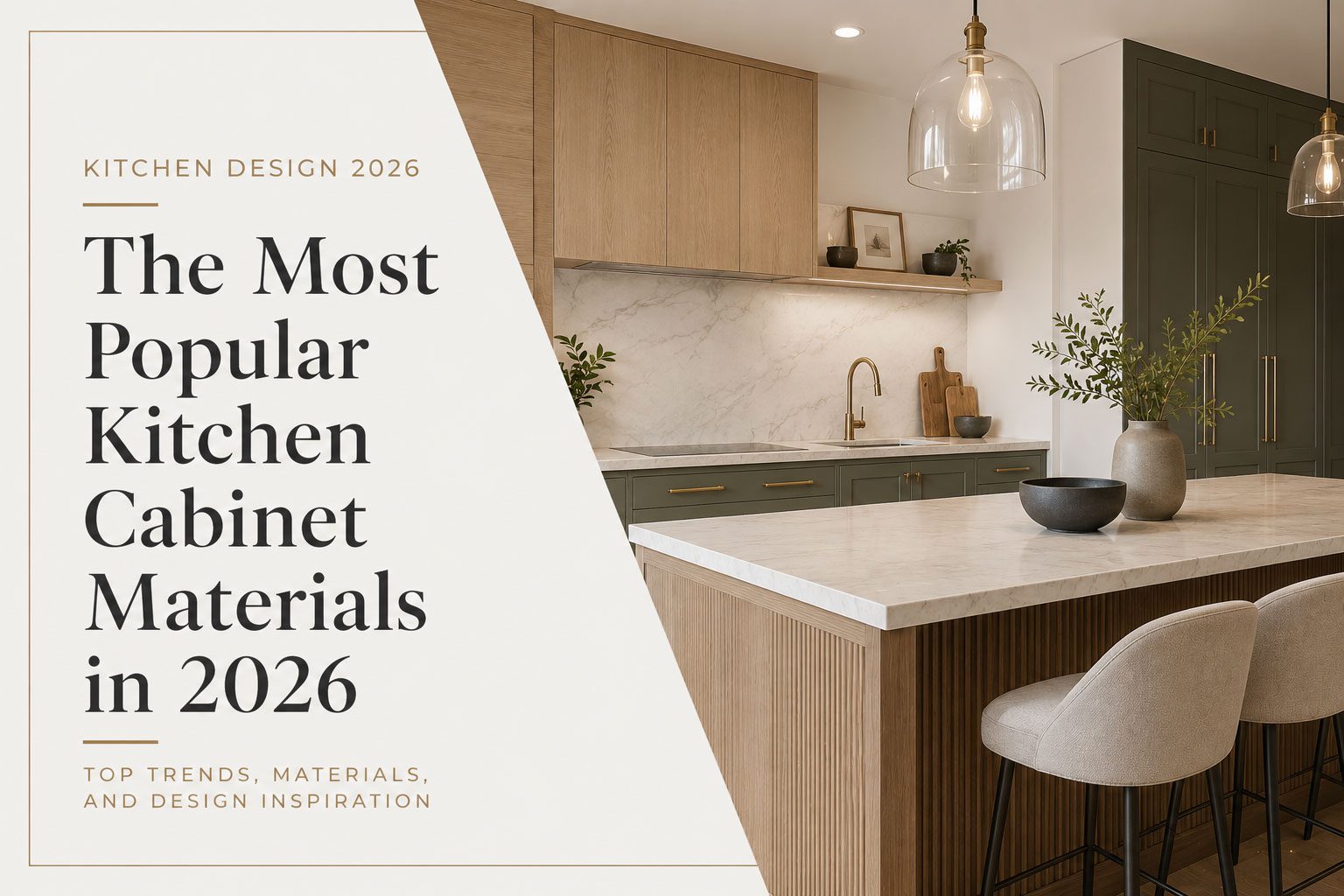
In 2026, kitchen design is shifting toward warmth, organic textures, and a style often referred to as “warm minimalism.” Homeowners are moving away from overly stark, clinical spaces and instead embracing materials that feel natural, inviting, and timeless. Kitchen cabinet materials play a major role in this transformation, with an emphasis on durability, texture, and subtle visual interest.
From natural wood grains to advanced matte finishes, today’s most popular cabinet materials strike a balance between modern design and long-term practicality. Below is a closer look at the leading cabinet material trends shaping kitchens in 2026.
1. Natural Wood & Wood Veneers
Natural materials are at the forefront of kitchen design this year. Instead of concealing imperfections, homeowners and designers are celebrating the unique grain patterns, knots, and tonal variations found in real wood.
White Oak
White oak continues to dominate as the most sought-after cabinet material. Its light, neutral tone works well in both modern and transitional kitchens, while its subtle grain adds just enough texture without overwhelming the space. It pairs especially well with stone countertops and warm metallic accents.
Walnut
For those looking to create a richer, more dramatic aesthetic, walnut remains a top choice. Known for its deep chocolate tones and elegant grain movement, walnut cabinetry brings warmth and sophistication to any kitchen design. It’s often used for feature areas like islands or full-height pantry walls.
Wood Veneers
Wood veneers have grown significantly in popularity, offering the look of solid wood at a more accessible price point. These materials use a thin layer of real wood applied over a stable engineered core, which helps prevent issues like warping or cracking over time. Veneers are an excellent option for homeowners who want the beauty of natural wood with added durability and cost efficiency.
2. Painted & Textured Engineered Materials
While natural wood is trending, painted cabinetry is far from disappearing. Instead, it’s evolving into more refined and textured applications, often using high-quality engineered materials.
Painted MDF (Medium-Density Fiberboard)
MDF remains the go-to material for painted cabinet doors, especially for classic styles like Shaker. Its smooth surface allows for a flawless, consistent finish without visible grain, making it ideal for clean, modern lines. In 2026, popular paint colors are shifting toward warmer tones such as soft taupe, olive green, muted navy, and earthy neutrals.
Fluted & Textured Panels
Flat cabinet fronts are being enhanced with subtle textures. Fluted, ribbed, and routed panels are becoming increasingly popular, particularly on kitchen islands or feature cabinetry. These details add depth and a tactile element that elevates the overall design without feeling overly decorative.
Advanced Matte Surfaces
High-gloss finishes are continuing to decline in popularity, replaced by ultra-matte, soft-touch materials. Products like advanced laminates offer a sleek, contemporary look while being highly practical. Many of these surfaces are fingerprint-resistant, scratch-resistant, and easy to maintain—making them ideal for busy households.
3. Mixed Materials & The Layered Look
One of the biggest shifts in 2026 kitchen design is the move away from uniformity. Instead of using a single material or color throughout, designers are layering different finishes to create contrast and visual interest.
Painted and Wood Combinations
A popular approach is to combine natural wood cabinetry with painted elements. For example, a kitchen may feature warm wood cabinets along the perimeter paired with a painted island in a contrasting color such as deep blue, forest green, or a soft “mushroom” tone. This combination creates a focal point while maintaining a cohesive overall look.
Contrasting Upper and Lower Cabinets
Another emerging trend is using different materials for upper and lower cabinets. Lighter finishes above and darker tones below help ground the space while keeping it open and airy.
Functional Design Meets Style
Beyond aesthetics, mixing materials can also serve a functional purpose. More durable or easy-to-clean finishes may be used in high-traffic areas, while natural wood is reserved for visual impact zones.
Choosing the Right Cabinet Material for Your Home
When selecting cabinet materials, it’s important to consider not just appearance, but also lifestyle, maintenance, and long-term durability. Homes in the Calgary and Airdrie area, for example, often experience seasonal temperature and humidity changes, making stability and material quality especially important.
Working with experienced cabinet professionals can help ensure you choose materials that not only look great but also perform well for years to come.
Final Thoughts
The most popular kitchen cabinet materials in 2026 reflect a broader shift toward warmth, authenticity, and thoughtful design. Whether you prefer the natural beauty of wood, the clean look of painted finishes, or a combination of both, today’s options offer more flexibility than ever.
If you are currently planning a kitchen renovation in the Airdrie or Calgary area, understanding these trends can help you make more confident design decisions. From selecting the right wood species to choosing durable engineered materials, the right cabinets will define both the look and functionality of your space.
If you’d like guidance on choosing the best cabinet materials for your home, working with a local expert can make the process much smoother and more enjoyable.